
Strychnine program targets gopher damage south of Rosetown
By Ian MacKay
Farmers in an area directly south of Rosetown are among those eligible to use strychnine to control gophers under a new two-year program.
“Under the Emergency Use Registration authorized through the Pest Control Products Act, areas in approximately seven crop districts in southwest, southeast, south central and northwest Saskatchewan will be eligible to access strychnine,” agriculture minister David Marit said in a statement. Areas in Alberta have also been approved to use the poison in a two per cent liquid solution until November 2027.
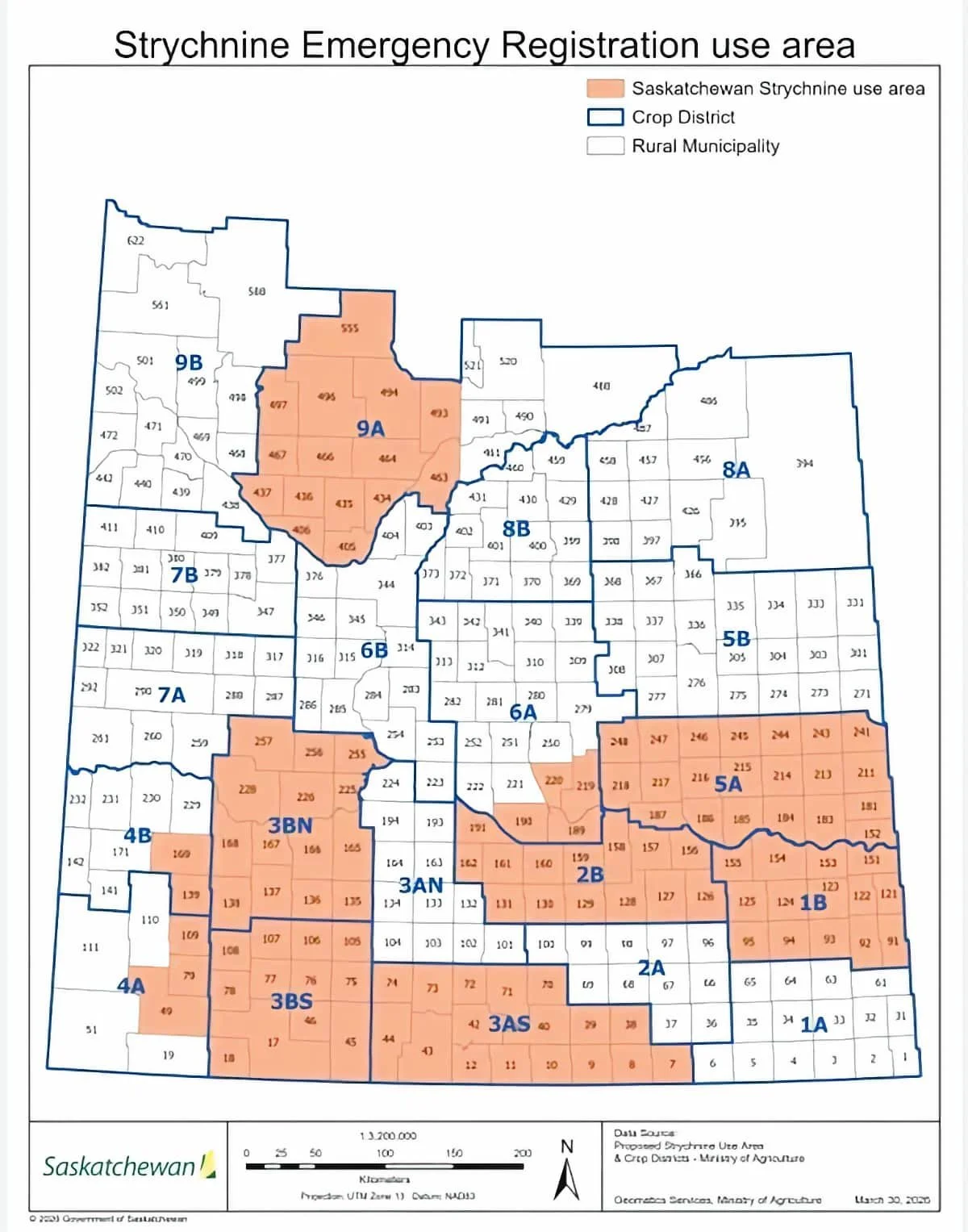
On March 30, the federal government approved “a time-limited and controlled emergency registration of strychnine” to address “multi-million dollars worth of damage from the recent Richardson ground squirrel infestation,” a Health Department statement said.
The designated zone south of Rosetown extends from the rural municipalities of Monet, King George and Coteau to the United States border, and east along the border to the Assiniboia area. It also includes a north-south strip of rural municipalities from Pittville to White Valley. Additional eligible areas lie north and east of the Battlefords and in a block of east-central Saskatchewan several rural municipalities north of the border.
“Saskatchewan producers have been clear about the challenges they face in managing gophers with the limited tools currently available,” Marit said. “We hope to see strychnine reinstated permanently in the future as a tool producers can use to manage gophers.”
Authorities used Saskatchewan Crop Insurance Corporation claims data and information on species at risk to define the approved zones, the provincial statement said.
“The revised Emergency Use Registration includes measures to protect species at risk, including a refined geographic scope, increased monitoring and carcass collection and disposal requirements and enhanced mandatory training,” it said. The province will use other measures to assist farmers outside the approved areas.
Farm groups welcomed the decision.
Bill Huber, president of the Saskatchewan Association of Rural Municipalities, said the organization “will continue to work with governments and producers to ensure this tool is used responsibly and effectively.”
“The considerable negative economic impact of Richardson’s ground squirrels is a reality for many livestock producers, and their ability to manage this pest is essential,” said Chad Ross, chair of the Saskatchewan Cattle Association.