
Sask. Pulse Growers elect Lawrence as chair
By Ian MacKay
Stuart Lawrence cheered last week’s announcement of more work to find new methods of dealing with herbicide-resistant weeds.
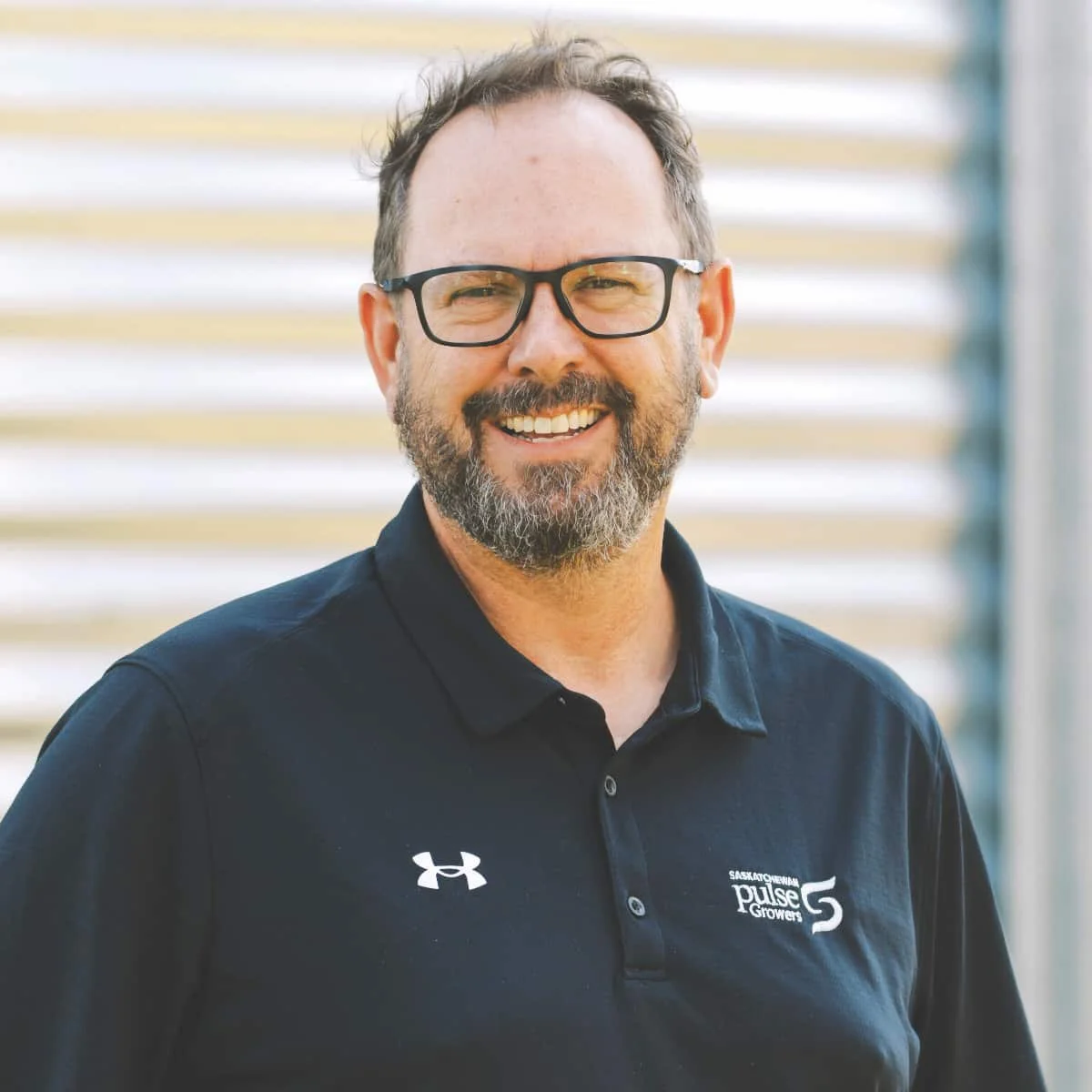
Lawrence, who farms south of Rosetown, was chosen to chair the Saskatchewan Pulse Growers at their annual general meeting in Saskatoon last Tuesday.
The growers also named Elyce Simpson Fraser of Moose Jaw, who directs Simpson Seeds, the winner of their 2025 Pulse Promoter Award “for her leadership in expanding value-added pulse processing” and “her passionate advocacy for pulse crops at the grassroots level.”
Federal and provincial authorities said they’d help pay for a major research project into herbicide-resistance kochia and wild oats.
“That’s one of the reasons why I ran to be on the Saskatchewan Pulse Growers board - to fund research toward herbicide resistance in weeds,” Lawrence said in an interview. “That’s been a really big investment. I’ve sat on the R&D committee for three years and that’s been a lot of our work.”
The pulse growers pledged $175,000, “that got leveraged pretty good,” towards the strategic research initiative grant of $3.2 million to 29 researchers aiming to find answers.
“It’s been an ongoing focus for us to try and get some different tools and some different research going on kochia,” Lawrence said. Kochia and root rots caused him to plant less land to pulses.
“Prior to 2016, I would have said that our biggest issue was kochia,” Lawrence said. After that year, he and many neighbours reduced their lentil acreage “because the tools we had at the time were pretty ineffective at controlling kochia long term,” he explained.
“All of our lentils just died” form root rot after 30 to 35 inches of rain fell on the family farm’s land that year, Lawrence said. “We didn’t know how bad it was.” Now,“we can’t grow lentils” in fields that were planted to lentils or canola in 2016, he said.
Meanwhile, he wouldn’t predict whether Canada would ever reach a resolution on pulse tariffs imposed by India, which can be a major market for Canadian pulses.
He’s learned that the Indian government wants the country to “be self-sufficient in producing protein,” he said. Farmers make up about 20 per cent of its population and the government is apparently “not concerned about food inflation as long as they’re sufficient in protein,” he said.
That helps create a “trade policy that’s focused on encouraging local production in India and, when they can’t produce enough, they import from other countries like Canada,” reducing tariffs to do so, he said.
“Unlike in Canada, their farmers are an important voting bloc and that helps steer their policies,” he said.
Lentil prices in Canada have fallen by roughly half over the few years, improving demand, he said.
Lawrence also agreed that it was good news that China had agreed to lower its tariff against Canadian peas, later noting that many farmers in this region, including himself, stopped growing them and reduced their lentil acreage after extremely wet conditions in the fall of 2016 produced root rots that cut production.
“Peas are even more susceptible to the root-rot complex than lentils are,” he noted. Many west-central Saskatchewan growers concentrated on lentils because “the chance of having a crop failure because of root rot was greater (for peas) and the returns per acre and cost of production (for lentils) were very similar,” he said.
During the 1990s, peas and lentils would have covered about half the Lawrence acres, he said. “Now, under 20 per cent of our acres are lentil. We’ve dropped peas completely.
“We’ve started to substitute other crops that have fewer issues with root rots, like chick peas,” he said. “We’re starting to grow kabuli chick peas again. They have their own challenges because they have indeterminate growth. In a wet fall, they don’t want to mature, but, at the same time, they’re not as susceptible to fusarium root rot. They’re a host of, but not affected by aphanomyces,” a root rot.
Organization leaders have begun advising people to switch to minor-use crops less susceptible to root rots, such as chick peas, faba beans, dry beans and fenugreek, he noted.
“We have a focus on trying to provide two viable pulse crop options on every acre in Saskatchewan,” he said.
“I guess the stars aligned,” he said about directors choosing him to head the organization. “I’m excited to have the support of the board of directors.”
He expressed appreciation to Dinsmore’s Brad Blackwell, a previous board chair, “for his contributions to the board over the past nine years,” he said. Blackwell recently completed his third consecutive term on the board, the limit.
“I’m pleased that Dan Flynn from Lucky Lake has stepped up and joined the board, as well,” Lawrence added.