
Monarchs are back in Saskatchewan
As summer officially kicks off on the prairies, the monarch butterfly is back in Saskatchewan to start the next generation of its life cycle.
Saskatchewan's largest and most iconic butterfly displays bold black and orange colouration to warn predators away. That toxic quality comes from milkweed, the plant monarchs depend on for half their life cycle.
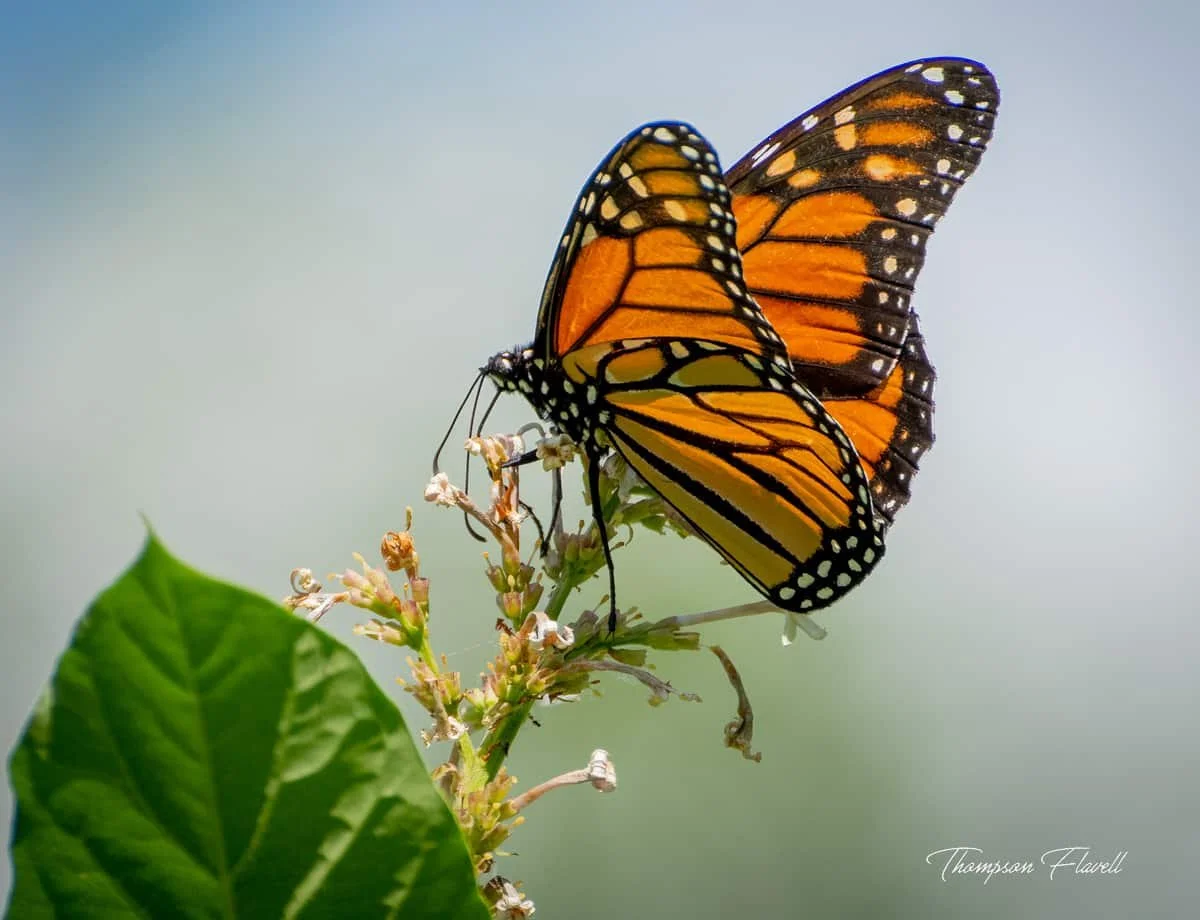
A monarch butterfly rests on a flowering plant. The species was listed as Endangered in late 2023. Photo Leila Thompson-Flavell
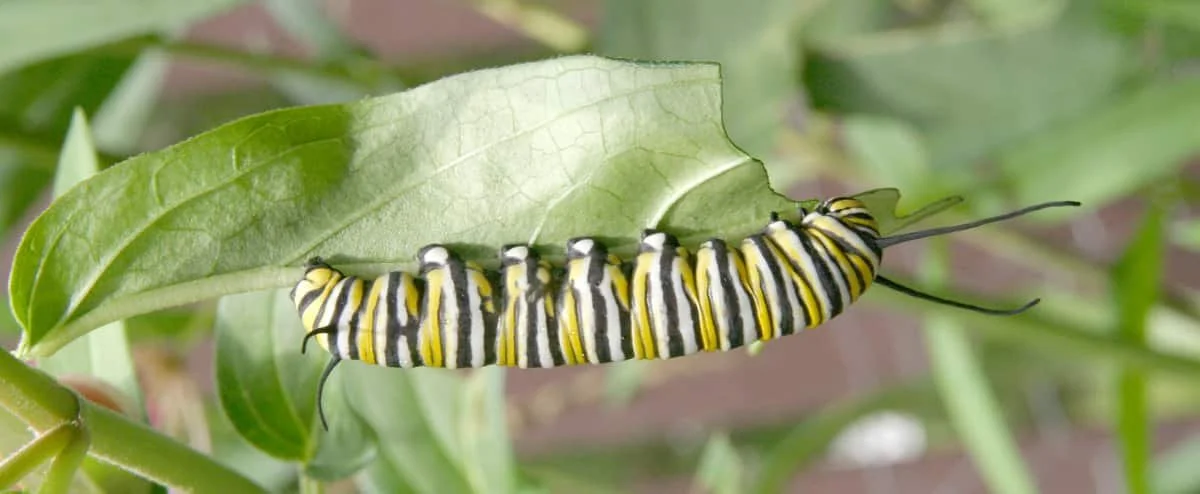
A monarch caterpillar feeds on milkweed. The bold black, yellow, and white banding warns predators of its toxic taste. Photo Kim Mann
"The monarch's return coincides with the milkweed's emergence and leafing out," said Emily Putz, Habitat Stewardship Coordinator for Nature Saskatchewan's Monarch program. "Right now, with the milkweed really starting to grow, it's a great time to check the underside of leaves for the first eggs and caterpillars of the year."
Monarch eggs are laid singly on the underside of leaves and have a distinct ridged oval shape that comes to a sharp point. Caterpillars display bands of black, yellow, and white. Both are found only on milkweed.
Putz encourages residents who want to support monarchs to plant native milkweed species. Saskatchewan has five native species, including Showy, Common, and Dwarf Milkweed, available through local garden nurseries. Tropical Milkweed should be avoided as it can spread harmful parasites.
Planting native flowers such as asters and goldenrods near milkweed patches also helps. Putz cautions against any captive breeding, noting that even catch and release can cause harm.
Monarchs were listed as Endangered in late 2023. Residents are encouraged to report sightings to Nature Saskatchewan's Stewards of Saskatchewan program. All personal information is kept private.
For more information, contact Emily Putz at 306-780-9832 or outreach@naturesask.ca.