
From Peacekeeping to NATO: A Family Tradition of Service
Arnold and Rylan Luthi share experiences from Egypt to Latvia
By David McIver
“Like father, like son,” the saying goes.
But so far, that hasn’t meant also being in an accident with a chicken truck in Egypt, nor dodging polar bears.
Still, serving in the military can be a family tradition.
Click for larger images
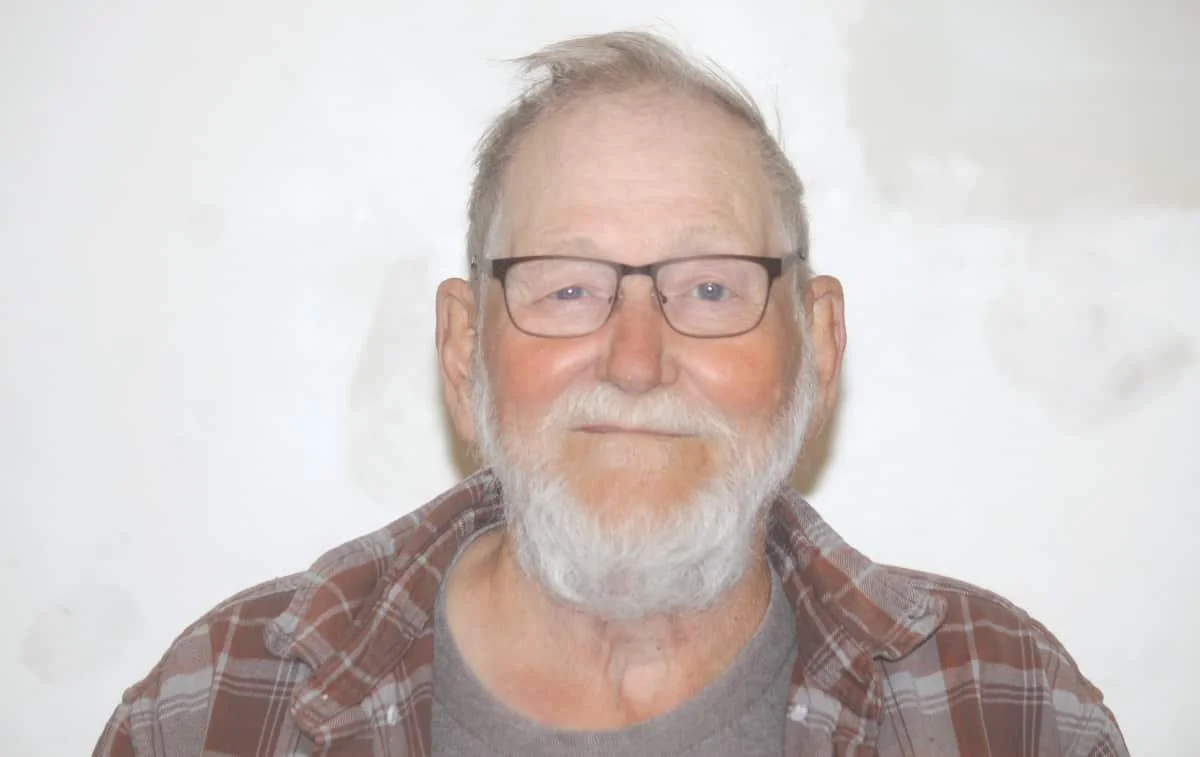
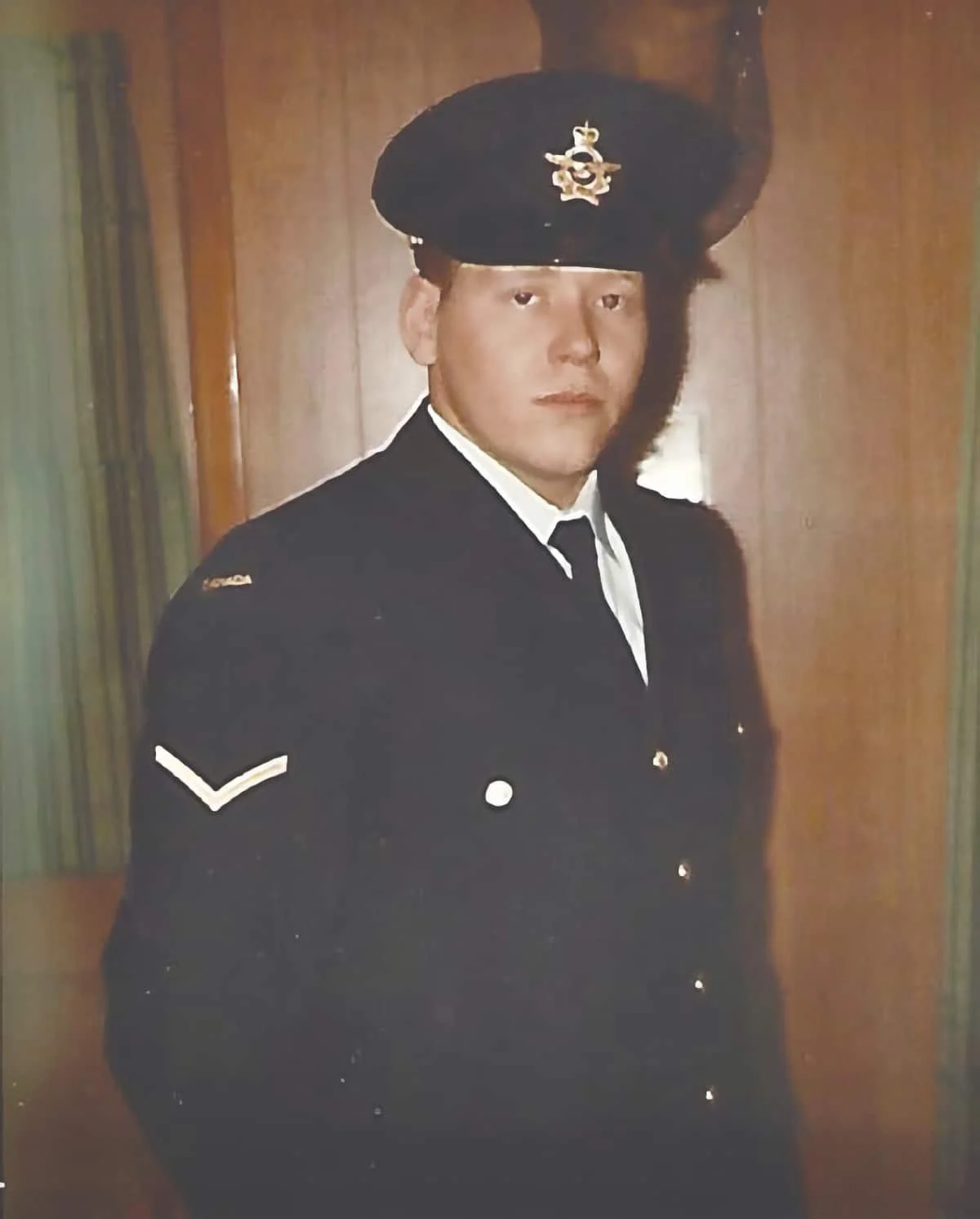
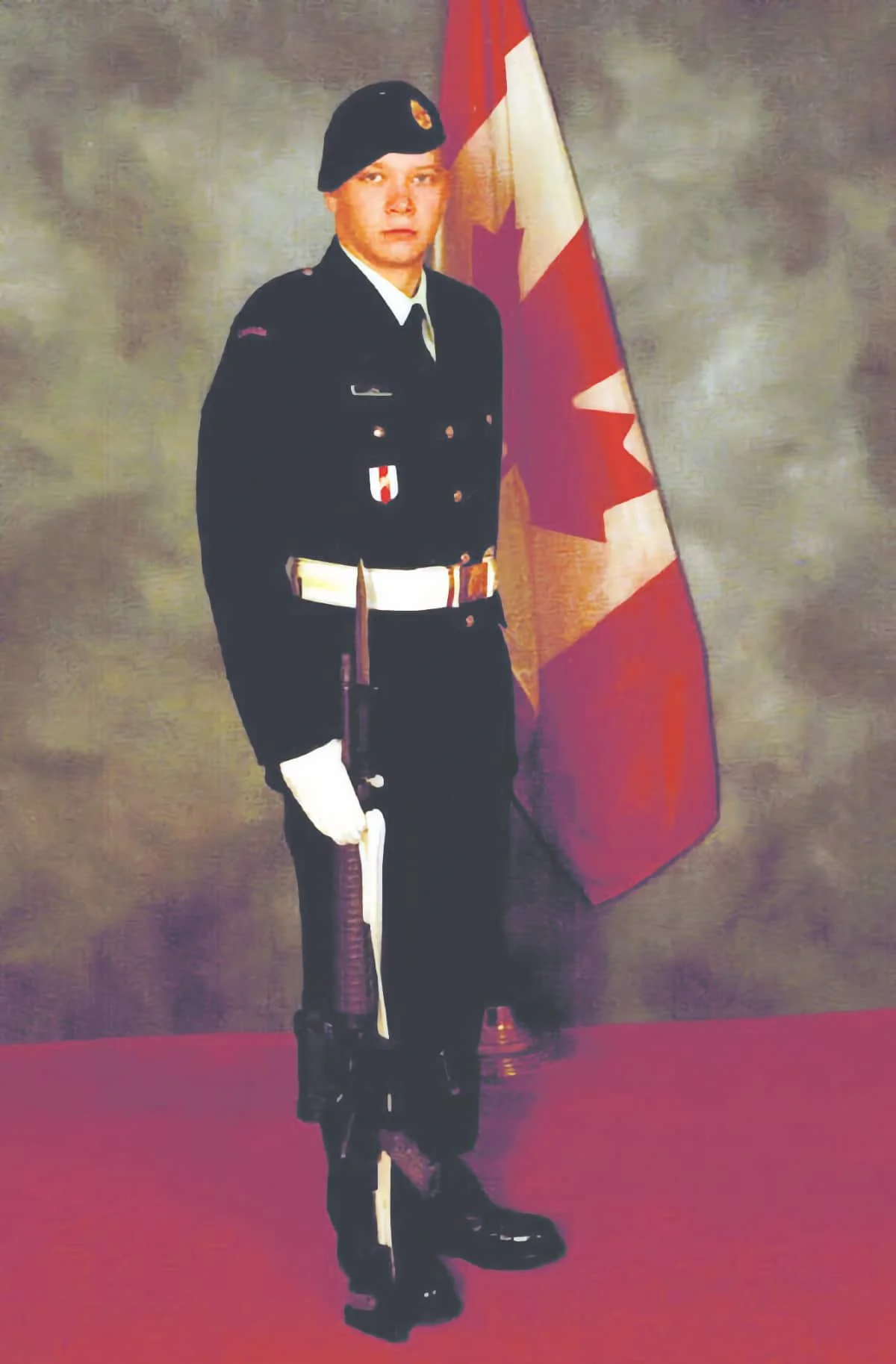
While happy to talk about his army experiences, Arnold Luthi of Rosetown wanted son Rylan included.
Rylan Luthi, 27, enlisted about 10 years ago and has had two tours of duty in Latvia as a member of the 2nd Battalion, Princess Patricia’s Canadian Light Infantry (2 PPCLI). He is currently stationed at the Sgt. Hugh Cairns VC Armoury in Saskatoon.
Arnold Luthi, 73, joined the army in 1969 when he was 17 and went on to serve in the corps of engineers, including in a Canadian peacekeeping contingent in Egypt in the 1970s.
Family in the military precedes Arnold.
A farming accident left his father unfit for service during the Second World War, but two uncles joined up. One had been on the Dieppe raid and said he was one of the lucky ones, by being taken prisoner, said Arnold.
Arnold’s experience was what led Rylan into the forces.
“I really didn’t know what I wanted to do after high school (graduating from Rosetown Central High in 2016),” said Rylan.
“Then I asked my dad, and he said he joined the military and it was some of his best years. So I was like, ‘I’ll give it a try, too.’”
After basic training in Quebec, Rylan chose to go into the infantry, which meant being sent to Wainwright, Alta., for infantry training, after which he was posted to 2 PPCLI at Camp Shilo, Man.
He knows another local man in the same battalion: Tanner Markham, a 2013 graduate of RCHS and son of Murray and Cheryl Markham and grandson of Don and Reta Markham.
Rylan has completed two six-month tours as part of the Canadian contribution to the NATO force in Latvia, in 2022 and last year.
The tours were spent mainly in training with soldiers of other nations, said Rylan. Each tour ended with an exercise involving all of them, he said.
In one exercise, the Canadians had to attack Swedish soldiers in dug-in positions defending bridges and other infrastructure. “And they slaughtered us,” he said.
Rylan was transferred to the armoury from Camp Shilo this fall.
He mainly looks after vehicles, signing them out to people and noting any problems. He’s one of only three full-time staff at the armoury. The others are 100–110 reservists from the North Saskatchewan Regiment, who are there every other weekend and do exercises at the camp at Dundurn.
Arnold Luthi, who grew up in Punnichy, Sask., got into the army after being kicked out of school, he said.
He’d gotten into a fight with another boy, he said.
The principal asked him, “Why don’t you just go home?”
He was 16 and only in Grade 9 and spent the winter working for a brother-in-law on a grain dryer.
Two friends asked him if he’d consider joining the armed forces.
Arnold thought of his uncles, who both came home from the war. “Let’s go to Regina and do that,” he replied.
Being 17, he needed his parents’ approval. His father said, “If that’s what you want,” and signed the approval paper.
A week later, the three of them went to Cornwallis, N.S., for basic training.
After arriving on an evening train, the trio were driven to the base and then “had people screaming at you,” he said.
They were among 100 recruits at a time when basic training had been compressed from four to five months to eight weeks, “which was an eternity,” he said.
They did a lot of running, including through obstacle courses. If someone “goofed up” halfway through the course, he had to start over.
“They weeded a lot out. There were times I was ready to throw my hands up in the air and go, ‘Go ahead. Throw me out.’
“But no, I stuck with it, which I’m glad I did.
“You got to find out who you really were and what you could take.”
From there, Luthi went to Kingston, Ont., where he joined the Royal Electrical and Mechanical Engineers (REME) and took the vehicle technician course, which ran six to seven months.
At Kingston, they tore apart engines from cars and armed forces vehicles, he said.
Luthi then got posted to 1st Service Battalion, Maintenance Company on the Sarcee base in southwestern Calgary.
The soldiers did a lot of “schemes” or war games, like the NATO exercises, he said.
Despite being a vehicle tech, he had to qualify on the shooting ranges at least once a year, which he enjoyed.
He also got to work on armoured personnel carriers (APCs) and the Centurion tank. He even got to do “a neutral turn” in a Centurion, pulling the tiller bars, one in each hand, and spinning the tank around.
Rylan has trained as a driver, gunner and crew commander on the modern APCs called LAVs, he said.
Luthi really enjoyed taking a course in recovering vehicles. The instructors purposely buried APCs or trucks, to be pulled out by a five-ton wrecker.
The recovery course and subsequent work were as much a highlight as going to Egypt, he said.
He spent six months in 1976 in Ismailia, Egypt, northeast of Cairo, as part of the peacekeeping force after the 1973 Yom Kippur War.
“We were out in the desert,” said Luthi.
Once, he and another engineer, Curly Roy, had to drive northwest in a three-quarter-ton truck to Alexandria to work on some vehicles.
“I didn’t know it when Curly was driving that he had a depth-perception problem,” said Luthi, chuckling.
Roy drove into the back of an Egyptian vehicle, something like a half-ton truck with a flat bed carrying cages of chickens. A few of the chickens got away.
Roy stopped, backed up a little, and sped off, Luthi said, laughing.
At Ismailia, there seemed to be “a never-ending flow of vehicles with blown motors,” due to sandstorms, he said.
When going out to bring in a vehicle, an engineer would first take a ball-peen hammer all around it to knock off scorpions, he said. Others had seen vipers, but Luthi was glad he didn’t.
Two Egyptians worked with them in the workshops, but the only other interaction with them was in the business district, getting illicit liquor.
Other soldiers there were Senegalese, Australians and Indonesians.
No one fired on the peacekeepers when Luthi was there.
The Egyptians and Israelis did have “some chaos amongst themselves,” he said. Israeli aircraft would fly over Egyptian territory and always do a victory roll.
The Canadians made trips to Tel Aviv, Israel, because “they had way better beer,” he said.
The land in Israel was green and the settlements, especially Tel Aviv, modern, unlike Egypt, he said.
The Canadian soldiers patronized a bar in that city owned by a Canadian who served “excellent hamburgers,” he said.
Army food generally is “not too bad,” he said.
The only time Luthi had to eat what is called C rations was during a two-week northern winter survival exercise on the west side of Hudson Bay. This was before the tour in Egypt.
Luthi and others pulled sleds, lived in tents, and tried to build igloos. They made fences of snow and tried to see if bullets would go through.
Luthi and others were in downtown Churchill when people were suddenly running into stores.
A storekeeper came out and suggested they also go inside.
“Why?” they asked.
“Obviously, the polar bears are coming down Main Street,” he said. Three large polar bears wandered down the street and away.
Luthi spent a little over seven years in the army.
A car accident in Calgary resulted in a broken leg, hip, arm and jaw, after which he realized he couldn’t do as much as he could before. He was only 24.
“What got me was, when on parade, I couldn’t handle the marching,” he said.
Luthi, who still lives with pain, didn’t seek a medical discharge, but his brother in Spiritwood asked him if he’d consider going into business with him.
After working in different businesses, Luthi moved to this area when Norm Hess offered him employment at Wheatland Industries, he said, mentioning also Tom Sieben from that work. After that closed, he worked for the RM of St. Andrews.
The experiences of father and son have similarities and differences.
Arnold “attained the dizzying heights of corporal,” he said, laughing.
Rylan, as a master corporal, has surpassed his father, said Arnold.
“Finding out about yourself,” being challenged to push oneself, had been a big part of Arnold’s experience.
“Not too much,” for Rylan, said the son.
In training, he’d realize that he had not slept in 16 hours. He’d be exhausted and not wanting to do it anymore. Then “you keep pushing through … you look back and think, ‘Yeah, it was hard but it was manageable.’ ”
What about being a soldier gives satisfaction?
“The opportunity to travel,” said Rylan.
He’s trained on an army base in Texas and, when in Latvia, got to travel to neighbouring Estonia.
As for how long Rylan will stay in the army, he’s on a three-year contract at the armoury, so “three years for sure,” he said.
For Arnold, one thing he is proud of is a medal he received for his service in Egypt, he said.
Words inscribed on the medal say, “In the service of peace.”