
Rosetown Writers Group shares prompt-inspired work at Wonder of Words evening
By David McIver
Many of the readings given at the Rosetown Writers Group Wonder of Words evening came from prompts.
Prompts "are considered homework and our members . . . always do their homework," explained Helen Mourre in introductory remarks at the gathering at the Anglican-Lutheran hall on May 5.
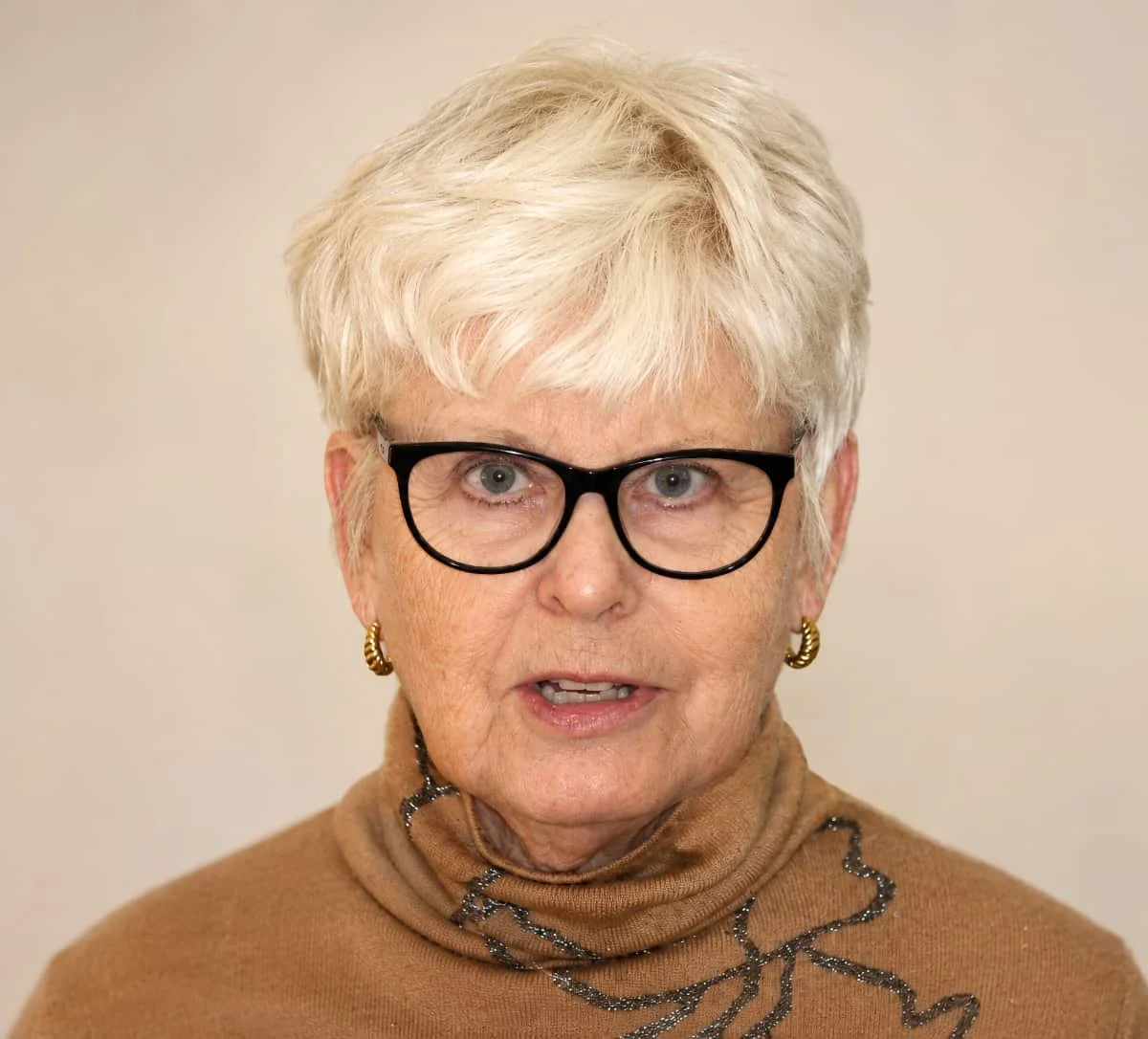
Helen Mourre. Photo by David McIver
A prompt resulted in Debbie McCulloch writing Gorgeous George, a short story about Sharon and how she planned revenge on a childhood bully.
"There, she locked onto those brown eyes she remembered from her youth," said McCulloch shortly before her conclusion.
David Saville says he writes because "it is cheaper than therapy and not as embarrassing as an intervention," said McCulloch in introducing Saville. He told two short stories, both written from prompts.
Saville told At the Tank from the point of view of a teenage boy waiting for a girl at an army tank memorial in a park.
From that peacetime setting, Saville moved to the thoughts of a soldier at war in winter in Home for Christmas. Finding a deer carcass, "That night we almost had fresh meat for a change . . . Most of us ate it and no one died that day."
While Wendy Johnson's poem Labour of Love tells of her love of growing flowers, she asks herself if she's becoming morose when dealing with the dying plants. "But then I remember: the dream begins again in spring."
In Johnson's piece Laughing at a Funeral, a grandmother explains to her granddaughter how laughter while reminiscing at the funeral lunch "is a way of healing as much as the funeral in the church."
Lisa Adair told The Poison Apple, "a fractured fairy tale," about Susan White, a mother of four young children and a freelance writer fired from her last job for using artificial intelligence to write an article.
Carl Lynn, a newer writer and Johnson's husband, told true stories from growing up in east central Alberta. One story related summer memories at a lake, which included getting shot by a bb gun and his brother's elimination-related vengeance for a friend's stealing chocolate bars. A boy named Eric didn't like criticism, though with some justification, of his singing. When he sang that Spanish Christmas song, it was "Fleece Nobby Nob." In subsequent Christmas concerts, the teacher gave him only speaking parts.
Jan Coffey Olson told about relationships: her hate-love one with ramen soup and the stormy relationship between their cat and a wren that yearly takes over the yard.
Helen Mourre wrote At the Villa when husband Paul was living in Rose Villa. Despite the name, it's not exotic, said Mourre. No one's happy about being here, she said. One man is allowed "two shots of whiskey a day delivered to him in a urine specimen bottle," a woman runs a house plant "grow-op" and a man once sang in a choir which performed a concert of Russian folk songs in Saskatoon. Mourre and grandson Elliot visit Paul and even daughter-in-law Felice drops in for a while. Despite rigid fingers, with coaxing, Paul plays the piano before the visitors leave. As they walk toward the doors, "We hear the piano tinkling Have I Told You Lately That I Love You? We pause and listen . . ."the big sliding doors open, I take a deep breath and we walk out of the villa into a chilly wind and bright sunshine."