
Program helps Rosetown seniors access health and support services
New proactive program offers direct navigation, referrals and in-home assessments — no doctor’s referral required.
By Ian MacKay
Help is available for older people in the Rosetown area who are unsure how to access health and other services without a doctor’s referral.
Taylor McGregor moved from nursing at the local hospital into the new, permanent role of leading the area’s Proactive Pathways for Older Adults program. The provincial government designated money for supportive care, resulting in her new position, McGregor told those attending the Rosetown Age Friendly safety event on Wednesday at the seniors centre.
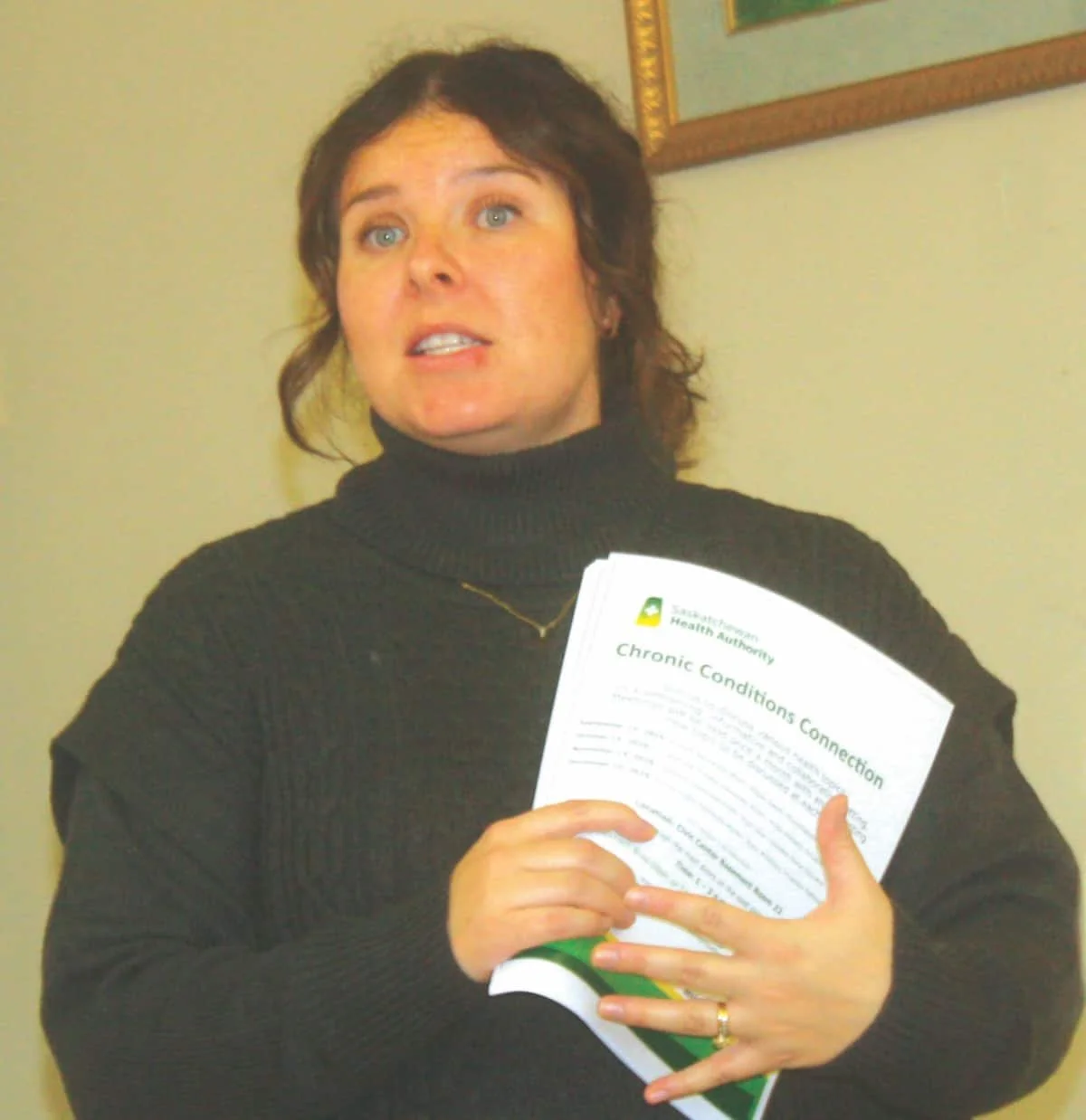
Taylor MCgregor. Photo by Ian MacKay
Her job involves helping older adults “navigate the health-care system (and) be a support for them,” she said. McGregor helps connect them with services, either through an existing health program or by, for example, “finding a list of people who are removing snow,” she said.
She stays in contact with 140 people since accepting her first client last February, while “filling in some of the gaps,” she said. Anyone who wants to “be proactive about their health” is eligible to join the program and may call her to set up an appointment. Physicians may also refer people.
By carefully listening to challenges her clients face, “that’s where we get the most done,” she said.
Besides herself, a social worker in the program can help people “a lot with financial supports” and by filling out necessary forms to improve living conditions or ensure adequate food, she said.
The program also has two continuing-care aides, including one who starts and conducts exercise programs in the region. Raelyn DeBusschere of Rose Villa also assists.
“We cover a large area,” McGregor said. “We’re on the road all the time, but wherever somebody needs our help, we go.”
She initially assesses people’s daily lives and determines what help they could use — such as meeting with a diabetic nurse educator or discussing medications with a pharmacist “because you’ve got some questions.”
Sometimes, she simply listens and helps people “work through things on their own,” she said. “I’m not there to tell you what I think you should do. I’m there to support you in your decisions in what you want to do with your health.”
After the initial assessment, she makes any referrals she believes will help, then calls clients a few weeks later to make sure the appropriate experts have contacted them.
“If they haven’t, I kick it up into high gear and figure out what needs to be done,” she said.
“You’re never discharged from the program — you’re kind of stuck with me,” McGregor said. “I can be there if you have questions.”
As one example, she arranged assistance for a woman about to undergo surgery who had been her husband’s caregiver.
“We got home care on board, involved the paramedicine program conducted by emergency medical technicians and located equipment she could use after her surgery,” she said.
People might not realize that they do not need a referral to have an occupational or exercise therapist come to their homes and, in the latter case, show them exercises they can do, McGregor said.