
Major research push aims to help farmers fight herbicide-resistant weeds
EAGLE STAFF
Almost 30 experts in plant research will work for five years help farmers deal with wild oats and kochia that stand up to herbicides.
Scientists with universities from Dalhousie to British Columbia and agencies including Ducks Unlimited and the Redberry Biosphere Region are scheduled to sign contracts in March to begin the $3.2-million project. The project is receiving $2.5 million from the provincial Agriculture Department’s strategic research measure, part of the federal-provincial crop-support program, a Saskatchewan Pulse Growers statement said.
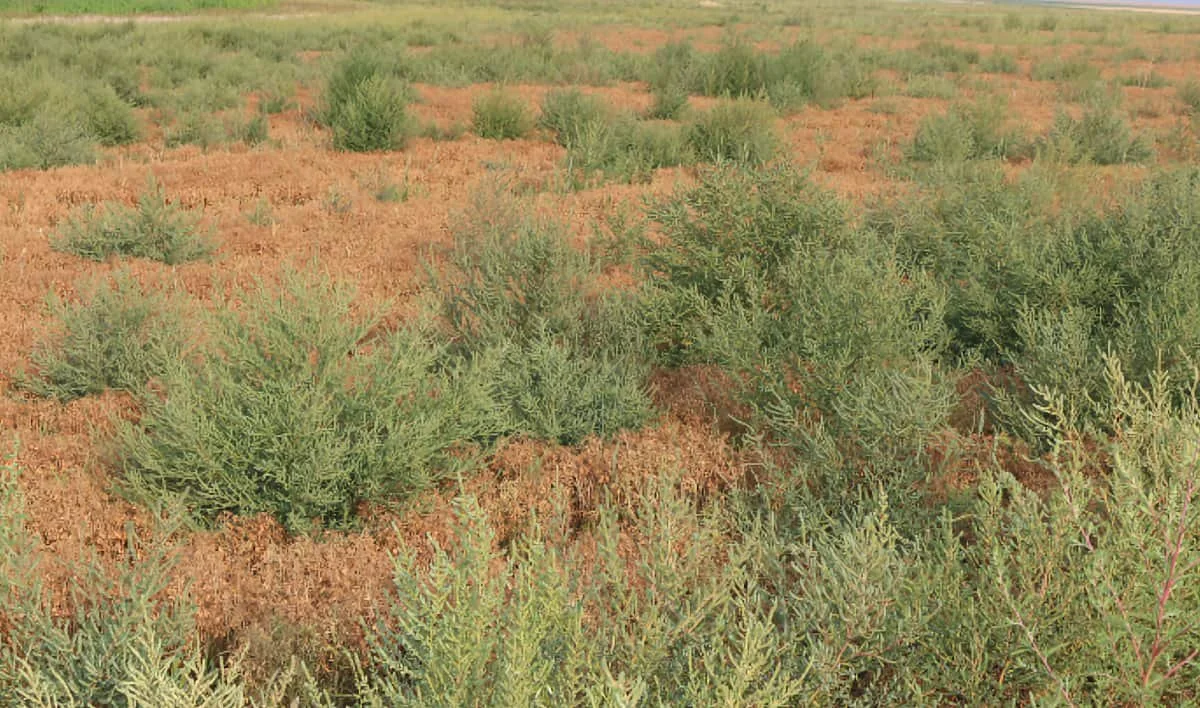
“The scale and scope of this program reflects the urgency of addressing herbicide resistance,” Sherrilyn Phelps, the pulse growers’ research and development director, said in the statement. The pulse growers, with $175,000, are among six farm organizations contributing almost $735,000.
Shaun Sharpe, who works with the federal Agriculture Department in Saskatoon, heads the project against “two of the most problematic weeds across the Prairies,” the statement said.
Federal researcher Charles Geddes conducted a survey showing that resistant weeds involving “21 unique resistant biotypes” were growing in 70 per cent of the 827 fields surveyed, a report in the Sask Wheat 2024-25 annual report said.
Geddes, in another study, determined “that many weeds can still produce viable seeds even when they emerge later in the season, highlighting “the importance of pre- and post-harvest management windows” and indicating that growing winter wheat or fall rye helps to “naturally cut off weed-seed return,” the Sask Wheat document said.
One of the 12 goals listed in a provincial document about the herbicide-resistant weeds project is to create methods “that combine crop competition, tillage and pre-emergent herbicides to quickly control outbreaks of herbicide-resistant kochia.”
"Herbicide-resistant weeds pose a critical threat to the sustainability and profitability of pulse production in Saskatchewan, and kochia management consistently ranks as a top concern we hear from growers," said Winston van Staveren in a pulse growers statement. Van Staveren, from Creelman, formerly chaired the pulse growers.
"Pulses, particularly lentils, are poor competitors against kochia, making effective weed control essential for successful production,” he said. “This multi-institutional research program represents a significant step forward in developing practical solutions that will help pulse growers effectively manage these challenging weeds while preserving the herbicide tools we depend on."
The scientists “are taking a comprehensive approach that goes beyond traditional weed management to explore innovative solutions, including molecular technologies and resistance-detection tools that will benefit growers for years to come,” added Sherrilyn Phelps, the growers’ research and development director. “The scale and scope of this program reflects the urgency of addressing herbicide resistance,” she said.
Led by Dr. Charles Geddes, research scientist with AAFC, the data revealed that 70 per cent of the 827 fields surveyed contained resistant weeds, and within those, there were 21 unique resistant biotypes.
Dr. Geddes also led another important study on this topic, supported by Sask Wheat, which showed that many weeds can still produce viable seeds even when they emerge later in the season. This information is valuable to producers, as it highlights the importance of pre- and post-harvest management windows and also suggests opportunities for crop choices—such as winter wheat or fall rye—that naturally cut off weed seed return.
Sharpe, as a researcher with the University of Florida after he received his doctorate there, “developed artificial intelligence for weed detection and precision spraying technology, studied germination and emergence of weeds and evaluated herbicides,” he told an interviewer with the Canadian Weed Science Society’s website.
Other project goal include seeing how well Group 1 herbicides work against “susceptible and resistant wild oat populations,” examining the two weeds’ surface wax characteristics “that may limit herbicide uptake and identify opportunities for RNA interference (RNAi) technology development, and “create a decision-support system that shows farmers how their management choices affect kochia and wild oat populations and helps reduce the risk of herbicide resistance.”
Among the other groups contributing money include the provincial wheat, oilseeds and barley development commissions, Alberta Grains and Results Driven Agriculture Research (RDAR).